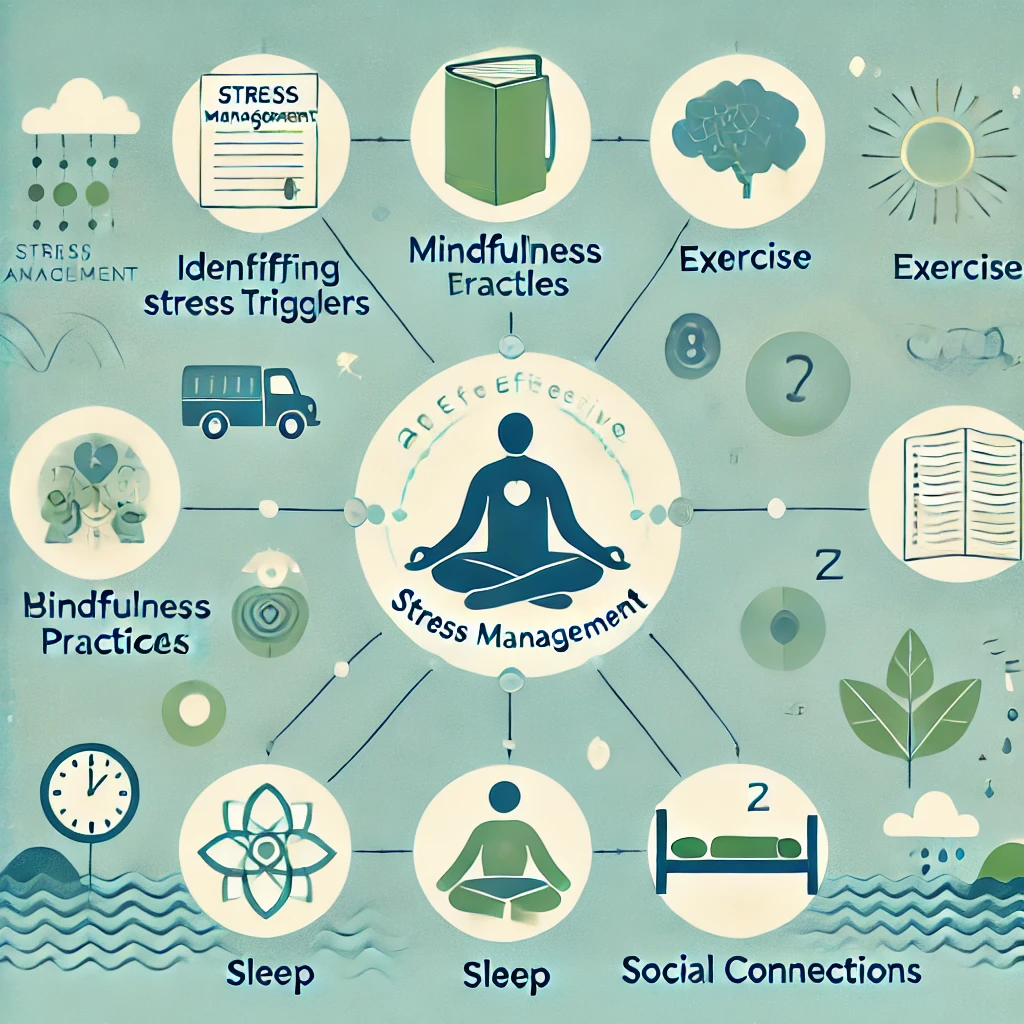

In today’s fast-paced world, managing stress effectively is more important than ever. Prolonged stress can take a toll on both mental and physical health, leading to burnout, anxiety, and other health issues. Fortunately, there are many stress management techniques that can help reduce stress and improve your overall well-being. Whether you’re dealing with work pressure, personal challenges, or daily life demands, these coping strategies will help you regain balance and calm. Here are ten easy-to-implement steps to begin your journey toward effective stress management.
1. Identify Your Stress Triggers
The first step in reducing stress is understanding what triggers it. Stressors can vary from work-related issues to personal problems, financial worries, or even environmental factors. Keeping a journal of situations that cause stress can help you recognize patterns and become more aware of the specific stressors in your life. By pinpointing these triggers, you can better prepare for or avoid them in the future.
Share your experience: What are some of the stress triggers you’ve identified in your life? How do you manage them?
2. Practice Deep Breathing Techniques
One of the simplest coping strategies for managing stress is deep breathing. Controlled breathing exercises can instantly calm your mind and body by reducing the levels of stress hormones like cortisol. Try the 4-7-8 method: inhale for four seconds, hold your breath for seven, and exhale slowly for eight seconds. This easy-to-implement technique can be practiced anywhere and is a powerful tool in reducing stress during tense situations.
Share your experience: Have you tried deep breathing techniques? What methods work best for you?
3. Set Clear Priorities
A common source of stress comes from feeling overwhelmed by tasks and responsibilities. Learn to set clear priorities by organizing your to-do list. Break down larger tasks into smaller, manageable steps, and tackle them one at a time. Time management and organization are vital stress management techniques that prevent tasks from piling up and becoming overwhelming.
Share your experience: How do you prioritize tasks to manage stress? Do you have a system that works well for you?
4. Exercise Regularly
Physical activity is one of the most effective mental health tips for managing stress. When you exercise, your body releases endorphins, which are natural mood boosters. Whether it’s a brisk walk, yoga, or a gym workout, regular exercise not only improves your physical health but also helps in reducing stress. Incorporate at least 30 minutes of moderate physical activity into your routine a few times a week to notice a big difference.
Share your experience: What types of exercise do you find most helpful for managing stress?
5. Adopt Mindfulness Practices
Mindfulness and meditation are essential stress management techniques that help bring your attention to the present moment. By practicing mindfulness, you learn to observe your thoughts and emotions without judgment, reducing the intensity of stress. Techniques like body scans, guided imagery, and mindful breathing help calm the mind and improve emotional regulation.
Share your experience: Have you practiced mindfulness or meditation? How has it helped you manage stress?
6. Develop Healthy Sleep Habits
Poor sleep is closely linked to higher levels of stress. To manage stress effectively, it’s important to get enough restorative sleep. Establish a bedtime routine that includes relaxation techniques such as reading or taking a warm bath. Avoid screens and caffeine close to bedtime. With improved sleep quality, you’ll have better energy and focus to handle stress throughout the day.
Share your experience: What is your go-to sleep routine to manage stress?
7. Connect with Others
Social support is a key component of coping strategies for reducing stress. Whether it’s talking to friends, family, or joining a support group, sharing your experiences and feelings can lighten your emotional load. Sometimes just knowing that someone is there to listen can greatly reduce feelings of isolation and stress.
Share your experience: How has connecting with others helped you manage stress? Do you have a support system in place?
8. Learn to Say No
One of the most empowering steps in reducing stress is learning to set boundaries. Overcommitting to tasks and obligations can lead to burnout and increased stress levels. Practice saying no when necessary and prioritize your own well-being. Setting limits helps you maintain control over your schedule and reduces unnecessary stress.
Share your experience: Have you found it difficult to say no? How do you set boundaries to manage stress?
9. Practice Gratitude
Adopting a gratitude mindset is a powerful mental health tip. Take a few minutes each day to reflect on the positive aspects of your life. Whether it’s writing in a gratitude journal or simply acknowledging the good moments, this practice shifts your focus from stressors to the things that bring you joy. This shift in perspective can reduce stress and promote overall mental well-being.
Share your experience: What gratitude practices have helped you reduce stress and improve your mental outlook?
10. Take Breaks Throughout the Day
It’s important to take short breaks throughout the day to recharge and reset. Continuous work or worrying without breaks can increase stress and fatigue. Step away from your tasks for a few minutes, stretch, take a walk, or simply rest your eyes. Regular breaks are essential coping strategies that can boost productivity while reducing stress.
Share your experience: How do you ensure that you take breaks during the day? What activities help you reset?
Final Thoughts
Managing stress effectively requires intentional effort and a commitment to taking care of yourself. By incorporating these simple, yet powerful stress management techniques into your daily routine, you’ll find that stress becomes more manageable, and your overall well-being improves. Remember, stress is a part of life, but with the right tools and mental health tips, you can maintain a sense of calm and control, even in the most stressful situations.
We’d love to hear from you: What stress management techniques have worked best for you? Feel free to share your tips and experiences in the comments below!