

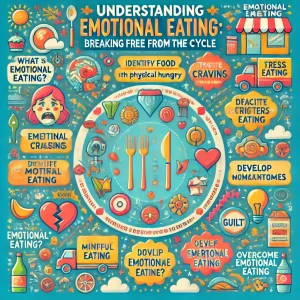
Many people struggle with understanding emotional eating and how it impacts their relationship with food.Naturally many people turn to food as a way to cope with emotions, seeking comfort during challenging times. This behavior, known as emotional eating, reveals a deeper connection between our feelings and food choices, one that can lead to unhealthy patterns if left unchecked.
But what is emotional eating, really? How can you recognize its signs, and more importantly, how can you regain control? Let’s explore the complexities of understanding emotional eating and uncover actionable steps to break free from its grip.
What is Emotional Eating?
Definition: Emotional eating occurs when food is used to manage feelings rather than satisfy physical hunger. It’s a way to self-soothe stress, anxiety, sadness, or even boredom.
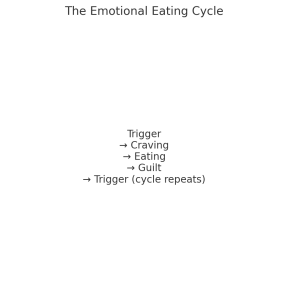
The Emotional Eating Cycle
Breaking the cycle of emotional eating requires understanding its structure. It typically follows these stages:
- Trigger: An emotional event sparks the urge to eat.
- Craving: The brain seeks specific comfort foods, often high in sugar or fat.
- Eating: Food is consumed not for hunger, but to dull emotional discomfort.
- Guilt: Feelings of shame or regret surface after eating, often deepening the distress.
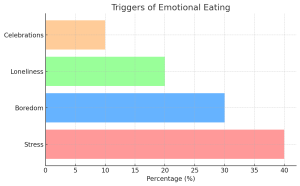
Common Triggers of Emotional Eating
Some of the most common triggers https://serenitymuse.org/how-to-identify-and-manage-emotional-triggers/include:
- Stress and Anxiety: Elevated cortisol levels increase cravings for indulgent foods.
- Boredom: Food becomes a way to pass the time.
- Loneliness and Sadness: Food serves as a companion to fill an emotional void.
- Joyful Events: Celebrations can encourage overeating.

How to Overcome Emotional Eating
Breaking the cycle involves a combination of awareness, mindfulness, and lifestyle changes. Here are practical steps to help you regain control:
- Identify Your Emotional Triggers: Keep a journal to track your emotions, food choices, and patterns.
- Practice Mindful Eating: Pay attention to flavors, textures, and aromas while eating.https://serenitymuse.org/mindful-eating-enhancing-mental-wellbeing-through-food-awareness/
- Develop Healthier Coping Mechanisms: Consider physical activities like yoga or meditation as alternatives to eating.https://serenitymuse.org/category/meditation/
- Maintain a Balanced Diet: A balanced diet can stabilize blood sugar levels and reduce cravings.
- Build a Support System: Share your journey with friends, family, or professionals.
- Pause and Reflect Before Eating: Ask yourself, “Am I truly hungry, or am I eating to manage emotions?”
- Seek Professional Guidance: Consulting a therapist or dietitian can provide valuable tools.
Final Thoughts
By identifying triggers, practicing mindfulness, and adopting healthier strategies, you can develop a positive relationship with food and emotions. This journey is not just about what you eat—it’s about understanding why you eat.
What about you? Have you struggled with emotional eating? We’d love to hear your story or tips in the comments below. Let’s support one another by sharing experiences and building a community of encouragement and understanding. Together, we can learn and grow!
